High-Protein Japanese Food Beyond Sushi: What to Order
Japanese food is bigger than sushi, and the rest of the menu splits just as sharply. Grilled skewers, hot pot and steamed egg custard are some of the leanest protein on any cuisine's menu — genuinely Platinum-tier. The comfort-food centerpieces are the trap: a bowl of ramen looks like a protein meal with its pork and soft egg, but the noodles and a rich, fatty broth do most of the calorie work. Here's every common non-sushi order ranked by Protein Density, sashimi and rolls not included — see our sushi guide for those.
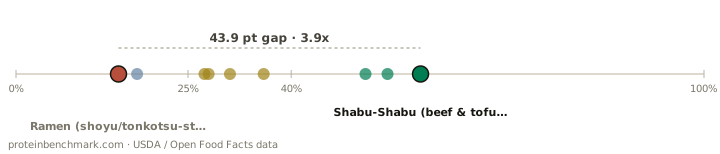
9 dishes ranked by Protein Density · best pick: Shabu-Shabu (beef & tofu hot pot, no rice) (58.8%) · estimates from USDA SR-Legacy ingredient data
The ranking
Sorted by Protein Density (% of calories from protein). Platinum 40%+ · Gold 25–39% · Silver 15–24% · Avoid under 15%. Every figure is an estimate (est.).
| # | Dish | Protein | Calories | Density % of calories from protein | g / 100 cal | Tier | Quality |
|---|---|---|---|---|---|---|---|
| 1 | Shabu-Shabu (beef & tofu hot pot, no rice) 1 hot-pot serving: ~120 g thin-sliced beef, ~100 g tofu, ~100 g mixed vegetables, dipped in ponzu | 55.7g | 379 | 58.8%est. | 14.7g | Platinum | Complete (mod.) |
| 2 | Yakitori (grilled chicken thigh skewers, light tare) 4-5 skewers, ~150 g grilled chicken thigh with a light brush of tare glaze | 38.1g | 282 | 54%est. | 13.5g | Platinum | Complete |
| 3 | Chawanmushi (steamed egg custard with shrimp & chicken) 1 cup, ~170 g: egg-dashi custard with shrimp, chicken and mushroom, steamed | 15g | 118 | 50.8%est. | 12.7g | Platinum | Complete (mod.) |
| 4 | Chicken Katsu (breaded, fried cutlet — no rice or sauce) 1 cutlet, ~150 g chicken breast, breaded and fried (no rice, no tonkatsu sauce) | 52.7g | 585 | 36%est. | 9g | Gold | Complete |
| 5 | Chicken Teriyaki Donburi (bowl with rice) 1 bowl: ~140 g grilled chicken thigh, teriyaki glaze, over ~200 g steamed rice | 42.5g | 546 | 31.1%est. | 7.8g | Gold | Complete |
| 6 | Gyudon (beef & onion rice bowl) 1 bowl: ~100 g thin-sliced simmered beef and onion in a dashi-soy-mirin sauce over ~260 g rice | 39.9g | 571 | 28%est. | 7g | Gold | Complete |
| 7 | Agedashi Tofu (fried tofu in dashi) 1 appetizer serving, ~120 g tofu, lightly floured and fried, served in ~60 g dashi broth | 23.5g | 343 | 27.4%est. | 6.9g | Gold | Complete (mod.) |
| 8 | Udon Noodle Soup (plain broth, no tempura) 1 bowl: ~250 g wheat noodles (udon/soba-style) in ~300 g dashi broth with scallion | 17.5g | 397 | 17.6%est. | 4.4g | Silver | Complementary |
| 9 | Ramen (shoyu/tonkotsu-style, with chashu and egg) 1 bowl: ~200 g noodles, ~395 g rich shoyu-tare broth with rendered pork fat, 2 slices chashu (~40 g raw-belly-equivalent), half a soft-boiled egg | 28.7g | 771 | 14.9%est. | 3.7g | Avoid | Complete (mod.) |
What to order
Thin-sliced beef and tofu cooked in broth with no batter and no oil, dipped lightly in ponzu — one of the cleanest hot-pot styles on offer. Skip the rice that sometimes gets added at the end and this stays Platinum.
~55.7g protein · 379 kcal · 58.8% (est.)
Plain grilled chicken on a stick with a light glaze is one of the best orders on a Japanese menu — almost pure protein with minimal added fat or sugar. Ask for the tare on the side to push it even higher.
~38.1g protein · 282 kcal · 54% (est.)
A savory steamed egg custard with shrimp, chicken and mushroom is mostly dashi and egg, so calories stay low while the protein garnishes do real work. A genuinely good light starter, not just a palate cleanser.
~15g protein · 118 kcal · 50.8% (est.)
A breaded, fried cutlet still lands Gold — lean chicken breast carries enough protein to survive the panko and oil. The sugar-heavy tonkatsu sauce and a mound of rice on the side are what actually drag a katsu meal down, not the cutlet itself.
~52.7g protein · 585 kcal · 36% (est.)
This is the everyday donburi-shop order — a full bowl with rice, not the stripped-down protein-only plate you'd get ordering chicken teriyaki at a sushi counter (see our sushi guide — that version runs over 50% density with no rice). Rice and extra glaze roughly cut the density in half here. Ask for the chicken with rice on the side and go light on the glaze if protein-per-calorie is the goal.
~42.5g protein · 546 kcal · 31.1% (est.)
Thin-sliced beef and onion simmered in a light dashi-soy-mirin sauce over rice is genuinely solid protein for a rice bowl. Classic gyudon proportions (small beef pile, big rice base) keep it mid-Gold rather than Platinum — ask for extra beef or less rice to push it higher.
~39.9g protein · 571 kcal · 28% (est.)
Tofu holds up surprisingly well even fried — a light starch dusting and a small amount of dashi don't add much relative to the protein already in the tofu. A better fried starter than shrimp tempura if protein density is the goal.
~23.5g protein · 343 kcal · 27.4% (est.)
What looks like protein but isn't
Popular Japanese orders that the Protein Density math drops to Silver or Avoid.
A big bowl of wheat noodles in broth with a scattering of scallion is filling, but the noodles and broth carry almost all the calories — there's no meaningful protein source in the bowl by default. Order it with a protein add-in (chicken, tofu, a soft egg) if you want it to do more than fill you up.
~17.5g protein · 397 kcal · 17.6% (est.)
Ramen looks like a protein meal — pork, egg, a hearty broth — but the noodles and the rendered pork fat in a rich broth dominate the calorie count. Two slices of chashu (built here from real USDA pork-belly data, ~53 g fat per 100 g) and half an egg aren't enough protein to offset a 200 g noodle block and a fat-forward broth. This is the honest centerpiece trap of Japanese food: order an extra egg or extra chashu and ask for a lighter broth if protein density matters here.
~28.7g protein · 771 kcal · 14.9% (est.)
How much protein do you need at this meal?
Order against a target, not a guess. Run your daily protein number, then use this ranking to hit it when you're out — or see how to do it on a suppressed appetite.
Japanese protein FAQ
What is the highest-protein Japanese food that isn't sushi?
Shabu-shabu (thin-sliced beef and tofu cooked in broth, dipped lightly in ponzu) and yakitori (grilled chicken thigh skewers) are the standout orders — both Platinum-tier, with 50%+ of calories from protein. Chawanmushi, the steamed egg-and-seafood custard, is a close third and makes a genuinely good light starter.
Is ramen high in protein?
Not really, despite the reputation. A bowl of ramen looks protein-forward — pork chashu, a soft-boiled egg, a rich broth — but a large block of noodles and a fatty tonkotsu or shoyu broth dominate the calorie count. It typically lands in Avoid tier: filling, but protein-light relative to calories. Ask for an extra egg or extra chashu if you want to shift the ratio.
Is Japanese food good for a high-protein diet or GLP-1 medications?
Selectively, yes. Skip the noodle bowls (ramen, plain udon or soba) and go for grilled, steamed or hot-pot dishes: yakitori, shabu-shabu, chawanmushi, or a katsu cutlet eaten without a big rice side. These give real protein for relatively few calories, which matters when appetite is already suppressed. Combine with our sushi guide for the sashimi-only orders.
Which Japanese food has the most protein?
Shabu-Shabu (beef & tofu hot pot, no rice) has the most protein per calorie among the Japanese dishes we track: 55.7g protein in 379 kcal (58.8% Protein Density, Platinum tier). Yakitori (grilled chicken thigh skewers, light tare) (54%) and Chawanmushi (steamed egg custard with shrimp & chicken) (50.8%) follow close behind. That leaves ramen (shoyu/tonkotsu-style, with chashu and egg) at the other end, at 14.9% (Avoid tier).
What is the highest protein Japanese takeout?
Shabu-Shabu (beef & tofu hot pot, no rice) is the highest-protein order among the Japanese takeout dishes we track: 55.7g protein in 379 kcal (58.8% Protein Density, Platinum tier). Yakitori (grilled chicken thigh skewers, light tare) (54%) and Chawanmushi (steamed egg custard with shrimp & chicken) (50.8%) are the next-best picks.
How much protein is in Japanese food?
Across the 9 Japanese dishes we track, protein ranges from 15g to 55.7g per serving, and Protein Density (the share of calories from protein) ranges from 14.9% to 58.8%. Shabu-Shabu (beef & tofu hot pot, no rice) leads at 58.8%; ramen (shoyu/tonkotsu-style, with chashu and egg) trails at 14.9%. What you order matters far more than the cuisine itself.
What Japanese food should I avoid for protein?
Ramen (shoyu/tonkotsu-style, with chashu and egg) (14.9%), Udon Noodle Soup (plain broth, no tempura) (17.6%) and Agedashi Tofu (fried tofu in dashi) (27.4%) rank lowest of the 9 Japanese dishes we track, as low as 14.9% Protein Density (Avoid tier). They're not necessarily bad food — they just carry little protein relative to their calories, so they shouldn't be counted toward a protein target.
How much protein is in shabu-shabu (beef & tofu hot pot, no rice)?
Shabu-Shabu (beef & tofu hot pot, no rice) has 55.7g protein in 379 kcal (58.8% Protein Density, Platinum tier) — that's 14.7g of protein per 100 calories, which ranks it #1 of 9 Japanese dishes we track.
How much protein is in yakitori (grilled chicken thigh skewers, light tare)?
Yakitori (grilled chicken thigh skewers, light tare) has 38.1g protein in 282 kcal (54% Protein Density, Platinum tier) — that's 13.5g of protein per 100 calories, which ranks it #2 of 9 Japanese dishes we track.
How much protein is in chawanmushi (steamed egg custard with shrimp & chicken)?
Chawanmushi (steamed egg custard with shrimp & chicken) has 15g protein in 118 kcal (50.8% Protein Density, Platinum tier) — that's 12.7g of protein per 100 calories, which ranks it #3 of 9 Japanese dishes we track.
How much protein is in chicken katsu (breaded, fried cutlet — no rice or sauce)?
Chicken Katsu (breaded, fried cutlet — no rice or sauce) has 52.7g protein in 585 kcal (36% Protein Density, Gold tier) — that's 9g of protein per 100 calories, which ranks it #4 of 9 Japanese dishes we track.
How much protein is in chicken teriyaki donburi (bowl with rice)?
Chicken Teriyaki Donburi (bowl with rice) has 42.5g protein in 546 kcal (31.1% Protein Density, Gold tier) — that's 7.8g of protein per 100 calories, which ranks it #5 of 9 Japanese dishes we track.
Other cuisines
Same Protein Density scoring, different menu.
What to order at Sushi restaurants →
What to order at Indian restaurants →
What to order at Mexican restaurants →
What to order at Chinese restaurants →
What to order at Thai restaurants →
What to order at Italian restaurants →
What to order at Korean restaurants →
What to order at Vietnamese restaurants →
What actually carries the protein on a Mediterranean diet →
What to order at a poke bar for protein →